Source Durable PE Soccer Training Cones for Agility Drills
Find durable pe soccer training cones from 30 verified listings. Compare specifications like PE plastic material, waterproof features, and OEM customization options for soccer football agility training applications.
Key considerations
Products List


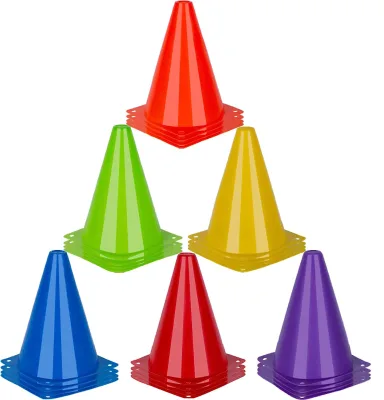
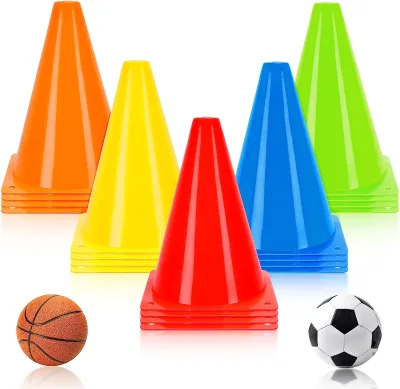
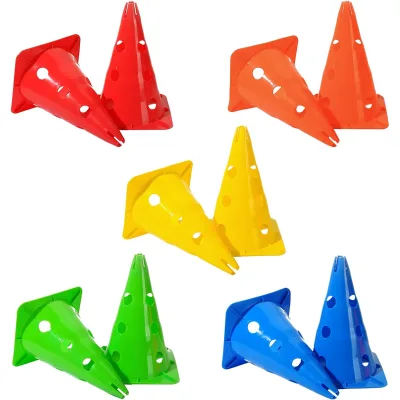
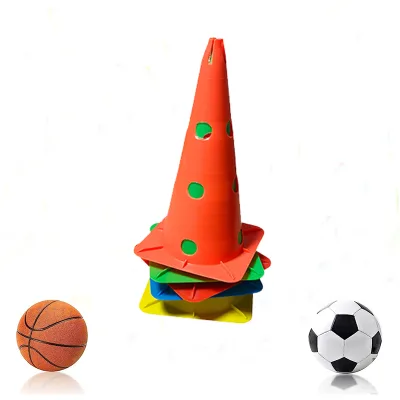


Comprehensive Sourcing Guide
Durable PE Soccer Training Cones Sourcing Guide
Sourcing durable polyethylene (PE) soccer training cones requires a disciplined approach to material verification and supplier qualification. These cones are fundamental tools for agility, speed, and coordination drills in football training, serving as essential markers for player movement and tactical exercises. The procurement process must balance cost-efficiency with the physical resilience required for high-frequency use on various surfaces, from artificial turf to natural grass. Buyers must navigate a market characterized by significant variation in manufacturing quality, where the term "durable" can range from thin, brittle plastic to robust, impact-resistant designs.
This guide provides evidence-based procurement strategies for sourcing these items, focusing on the specific attributes observed in current market listings. It addresses the critical decision points regarding material composition, dimensional specifications, and commercial terms. By adhering to the structured verification steps outlined below, procurement professionals can mitigate risks associated with product failure, inconsistent supply, and non-compliant materials. The objective is to establish a reliable supply chain that delivers consistent performance for sports training facilities, schools, and professional clubs.
Product Scope and Observed Listing Signals
The current market landscape for soccer training cones reveals a diverse range of product offerings, primarily centered around polyethylene construction. Observed listings indicate a price range of $0.08 to $4.50 USD, reflecting significant variance in quality, packaging, and order volume. The minimum order quantity (MOQ) spans from 1 piece to 60,000 pieces, suggesting that suppliers cater to both small-scale retail buyers and large institutional procurement contracts. This wide disparity in pricing and volume requirements necessitates careful alignment of order size with budget constraints and storage capabilities.
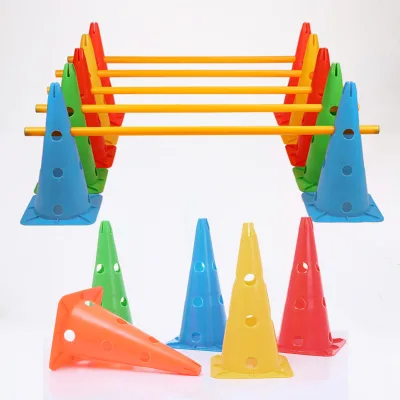
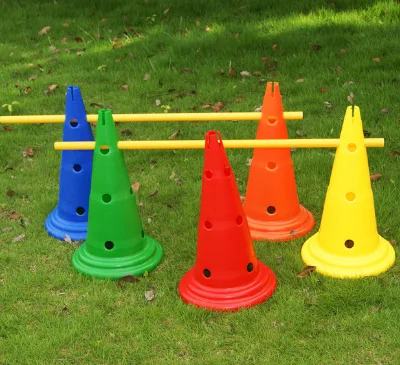
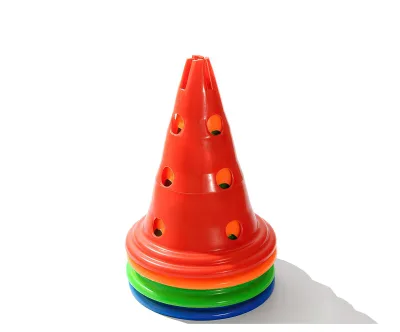
Key product attributes observed include customization options, waterproof features, and eco-friendly material claims. Specific models identified in listings include the "wl-cone" and the "HD-OPS20" and "HD-OPS21" series, with sizes ranging from 18cm to 48cm. The material is consistently identified as PE plastic, with single gross weights varying from 0.2 kg to 1.5 kg depending on the model and packaging density. Buyers should note that while "OEM" and "Customized" are frequently advertised, the actual implementation of branding and design changes must be explicitly confirmed in the purchase agreement to avoid generic deliveries.
Technical Specifications to Verify
Material integrity is the primary determinant of cone durability, with polyethylene being the standard choice due to its flexibility and resistance to cracking. Buyers must verify the specific grade of PE used, as lower-quality variants may become brittle in cold weather or degrade under prolonged UV exposure. The observed listings mention "eco-friendly" and "durable" features, but these are qualitative claims that require physical verification. Procurement teams should request material samples to test for tensile strength and impact resistance, ensuring the cones can withstand being stepped on, kicked, or dragged across rough surfaces without deforming permanently.
Dimensional accuracy and packaging consistency are critical for operational efficiency in training environments. Listings show single package sizes ranging from 10x10x10 cm to 55x40x27 cm, with packing densities varying from 200 to 500 pieces per carton. These variations directly impact shipping costs and storage logistics. Buyers must confirm the exact dimensions of the cones themselves, as sizes like 23cm, 32cm, and 38cm serve different training purposes. Inconsistent sizing can lead to confusion during drills, so verifying that the physical product matches the stated specifications is essential before finalizing large orders.
Compliance and Safety Documentation
Safety compliance is paramount when sourcing equipment used by athletes, particularly in youth and school settings. While specific certification statuses are not universally declared in the observed listings, buyers must ensure that the PE material used is free from harmful substances such as phthalates, lead, or heavy metals. The "eco-friendly" claims observed in some product descriptions should be backed by verifiable documentation, such as material safety data sheets (MSDS) or compliance with relevant chemical regulations in the destination market. Without such documentation, the risk of regulatory non-compliance and potential health hazards remains unmitigated.
Product labeling and packaging must also adhere to safety and informational standards. The observed listings indicate that products are often sold as single items or in bulk cartons, with branding options including OEM and specific brand names like "Aolilai." Buyers should verify that the final product includes clear labeling regarding material composition, care instructions, and any relevant safety warnings. Additionally, the origin of the products, primarily noted as Qingdao and Zhejiang in China, should be cross-referenced with import regulations and trade policies applicable to the buyer’s region to ensure smooth customs clearance.
Cost Drivers and Commercial Terms
The cost of soccer training cones is influenced by several factors, including material quality, order volume, and customization requirements. The observed price range of $0.08 to $4.50 USD highlights the impact of these variables, with lower prices typically associated with higher MOQs and standard, non-customized designs. Buyers should analyze the total landed cost, which includes not only the unit price but also shipping, insurance, and import duties. The wide MOQ range, from 1 to 60,000 pieces, allows for flexibility, but smaller orders may incur higher per-unit costs due to fixed production and setup fees.
Commercial terms such as payment methods, lead times, and return policies are critical components of the procurement agreement. While specific lead times are not detailed in the observed listings, buyers should negotiate clear timelines for production and delivery, especially for customized orders which may require additional processing time. The availability of samples is noted in several listings, which can be a valuable tool for quality assessment before committing to large volumes. Buyers should leverage this opportunity to validate product quality and supplier responsiveness, using the sample phase to establish a baseline for performance expectations.
Supplier Qualification and Quality Control
Supplier qualification is a crucial step in ensuring a reliable supply of durable soccer training cones. Buyers should conduct thorough due diligence on potential suppliers, verifying their business licenses, manufacturing capabilities, and quality control processes. The observed listings indicate that many suppliers offer OEM services and customization, which suggests a level of manufacturing flexibility. However, buyers must assess whether the supplier has the infrastructure to maintain consistent quality across large production runs, particularly when dealing with high MOQs.
Quality control measures should be integrated into the procurement process to minimize the risk of receiving defective products. Buyers should implement pre-shipment inspections to verify product dimensions, material integrity, and packaging accuracy. The observed variations in single gross weight and package size suggest that quality control is not uniform across all listings, making independent verification essential. Establishing clear acceptance criteria and communication channels with the supplier can help address any discrepancies promptly, ensuring that the final delivered goods meet the specified requirements.
Long-Term Procurement Checks
Long-term procurement success depends on establishing a sustainable relationship with suppliers who can consistently deliver high-quality products. Buyers should monitor supplier performance over time, tracking metrics such as on-time delivery, product defect rates, and responsiveness to issues. The observed market data indicates a dynamic landscape with multiple suppliers offering similar products, providing buyers with the opportunity to switch suppliers if performance declines. Regular audits and feedback loops can help maintain high standards and drive continuous improvement in the supply chain.
As market trends and regulations evolve, buyers must remain vigilant about changes in material standards, safety requirements, and sustainability expectations. The "eco-friendly" claims observed in current listings may become more regulated in the future, requiring buyers to stay informed about emerging standards and certifications. By maintaining a proactive approach to supplier management and market analysis, procurement teams can ensure that their sourcing strategies remain effective and compliant, supporting the long-term needs of their training programs and organizational goals.
FAQs
What material are the soccer training cones made of?
The cones are constructed from PE plastic, ensuring durability and flexibility for repeated use. This material choice supports eco-friendly manufacturing while maintaining structural integrity during intense football agility training sessions.
Can I request custom colors for the training cones?
Yes, customization is available for colors such as red, orange, and multi-color options. Buyers can specify their requirements, and the supplier accepts OEM requests to match specific branding or team color schemes.
What is the minimum order quantity for these cones?
The minimum order quantity is 900 pieces for standard orders. However, the observed range indicates flexibility, with some listings showing MOQs as low as one unit for samples or specific configurations.
How are the cones packaged for shipment?
Packaging is flexible and can be arranged according to client requirements. Standard options include 200, 300, or 500 pieces per carton, depending on the specific model size and order volume.
Where are these soccer training products manufactured?
These products originate from manufacturing facilities in Qingdao and Zhejiang, China. The supply chain is established to support international shipping through ports like Ningbo for efficient global distribution.
Are samples available for testing before bulk purchase?
Available samples can be requested to verify product quality and specifications before committing to a large order. This allows buyers to assess the durability and performance of the PE plastic cones firsthand.